Engineering Blog
Practical insights, architectural deep dives, and real project experiences from engineer to engineer.
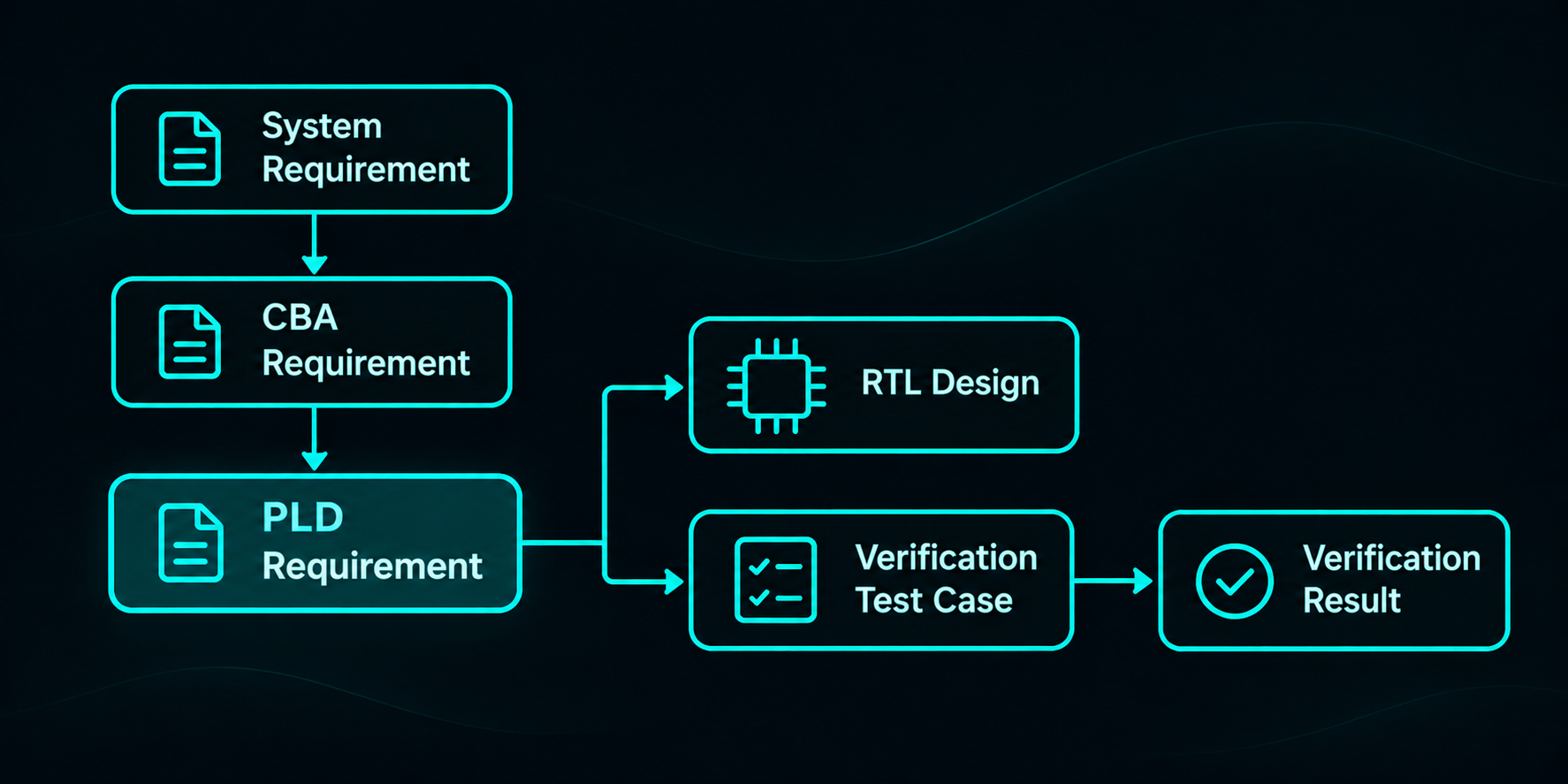
Traceability in FPGA Design: Linking Requirements to Design and Test
As an FPGA project grows, understanding the relationships between requirements, design elements, and verification activities becomes increasingly challenging. A single PLD requirement may affect multiple RTL modules, while one RTL module may implement several requirements. Traceability establishes relationships between requirements, design, and verification activities, allowing requirements to be followed from their origins through implementation and verification. Although traceability applies to many engineering disciplines, this article focuses on **how traceability can be established and maintained in FPGA development projects**, using practical examples involving PLD requirements, RTL design elements, and verification test cases.
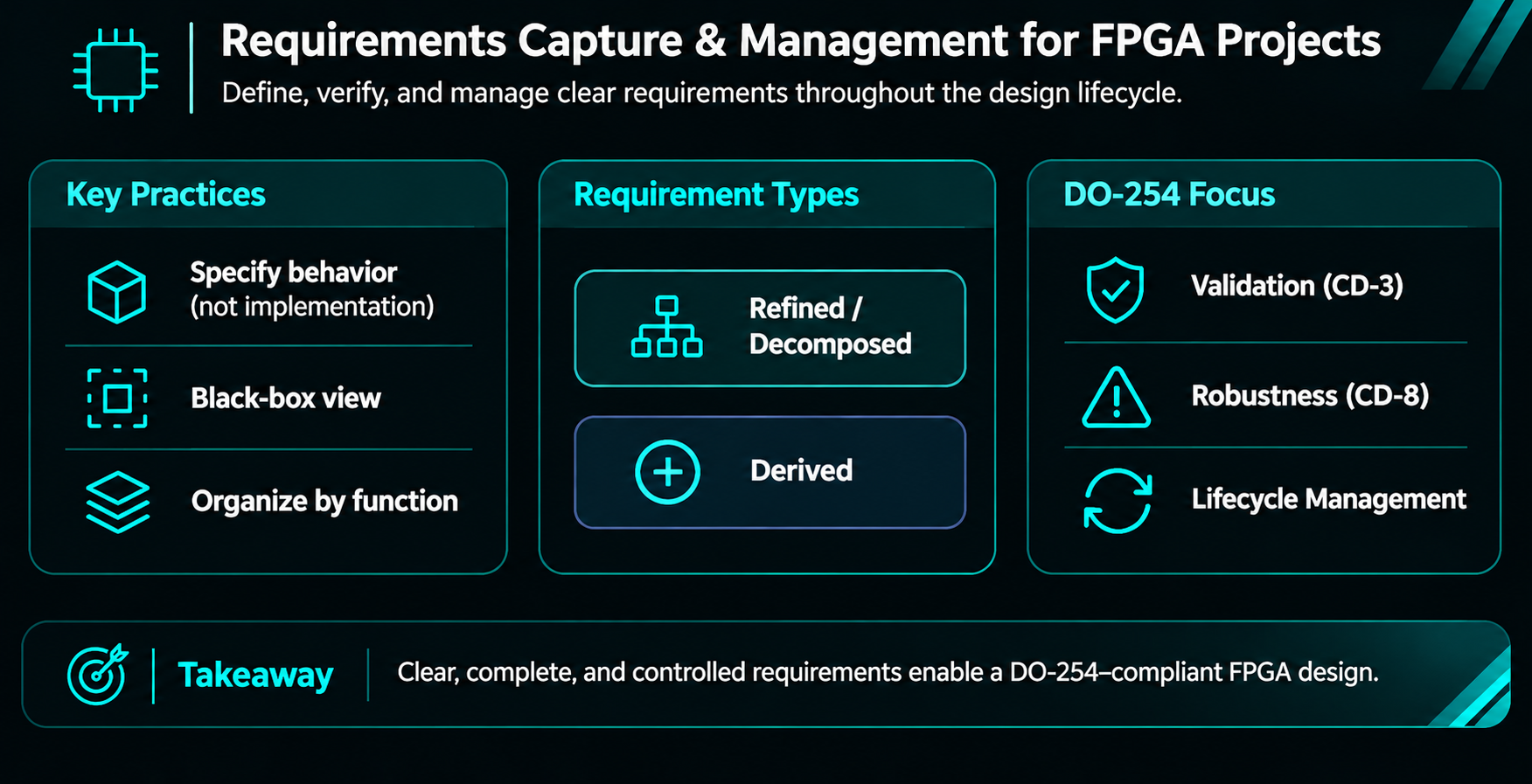
Requirements Capture & Management for FPGA Projects
An FPGA can pass every simulation test and still be the wrong design. A requirement describes what a system or component must do, under which conditions, and within which limits. It gives designers a target and verification engineers a way to check whether that target has been met. If the target is vague, even a well-written RTL implementation may not deliver the intended behavior. In larger systems, FPGA requirements do not appear in isolation. Functions begin at the system level and are allocated through the equipment architecture—often through a line replaceable unit (LRU) and a circuit board assembly (CBA)—until the responsibilities of the programmable logic device (PLD) are clear. An LRU can also be considered a standalone piece of equipment that performs a specific function within a system or aircraft. A CBA is an electronic board assembly consisting of components mounted on a printed circuit board (PCB) to perform specific functions within an LRU or other equipment. A typical flow is LRU requirements → CBA requirements → PLD requirements. Not every project needs every intermediate level, but the FPGA specification should always reflect what the surrounding hardware actually needs.
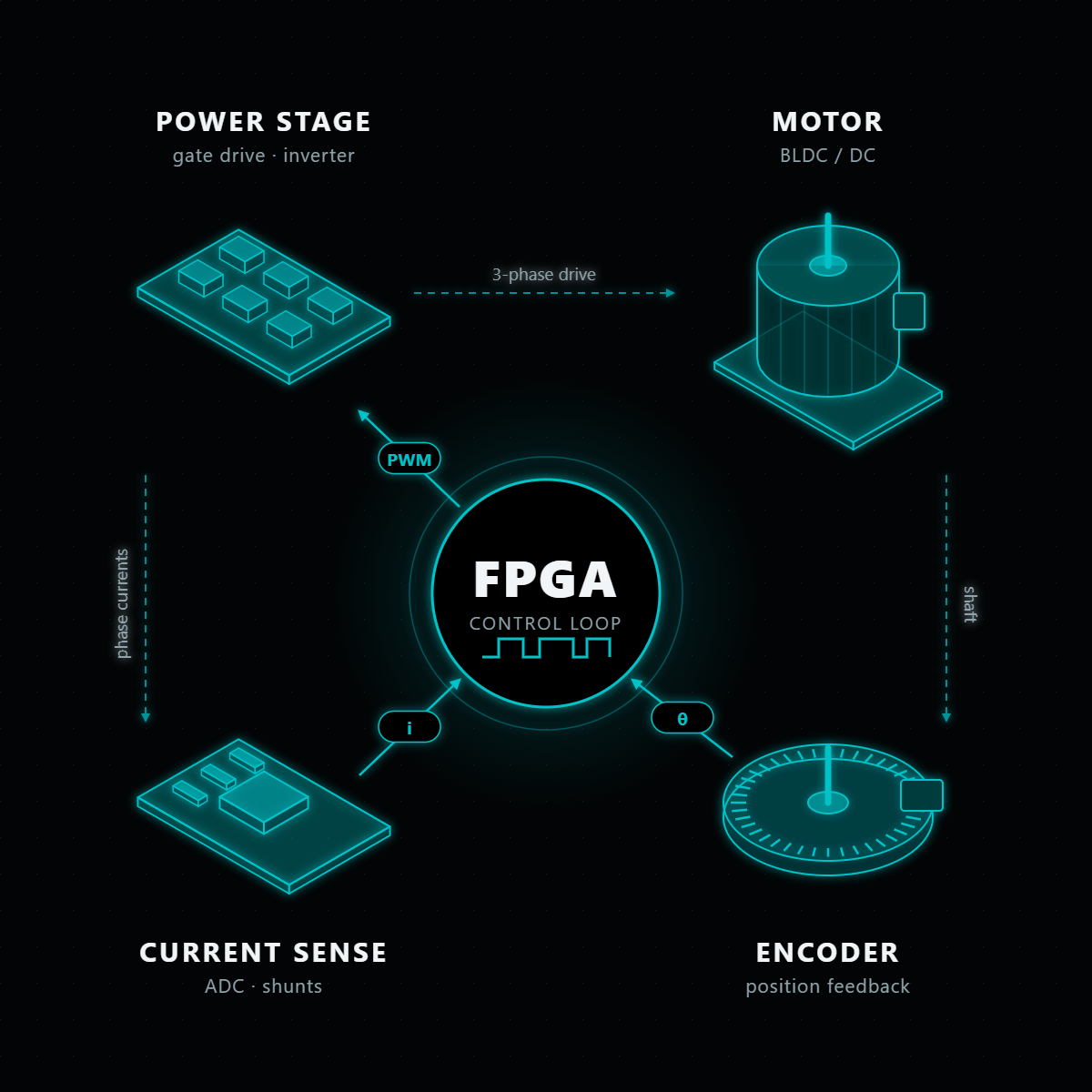
Deterministic Motor Control on FPGA: A Model-Based Approach
Why FPGA motor control loops have fixed latency, why the feedback path sets the limit, and a model-based Simulink-to-HDL flow with hardware results.
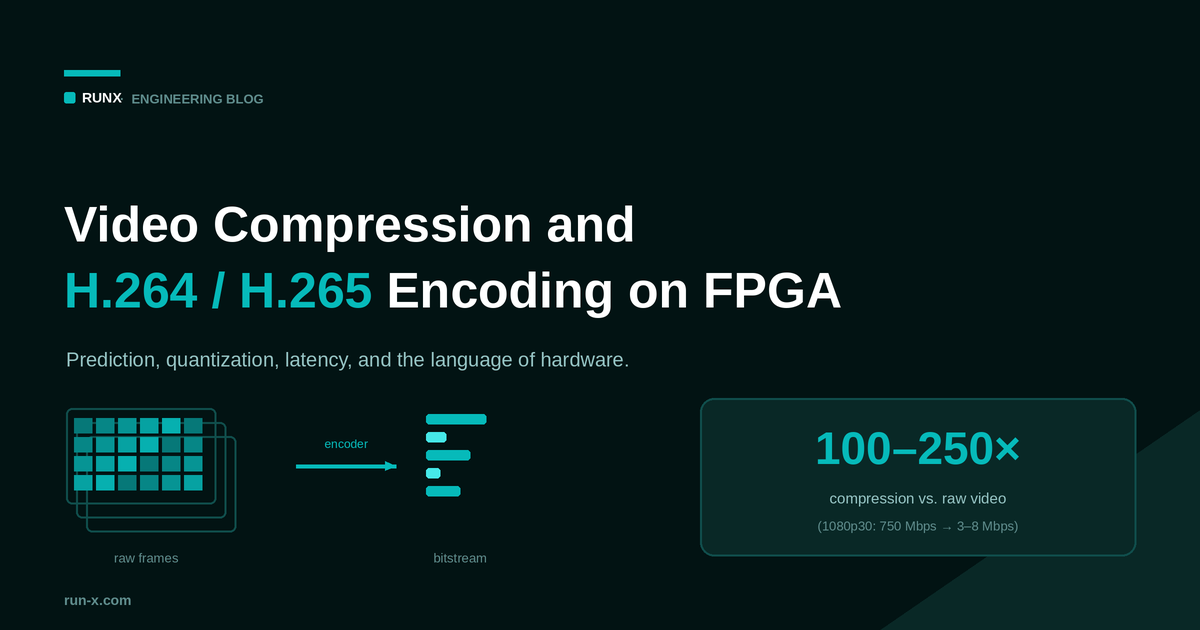
Video Compression and H.264/H.265 Encoding on FPGA
How H.264 and H.265 video compression maps to FPGA hardware: prediction, quantization, latency and serial dependencies.
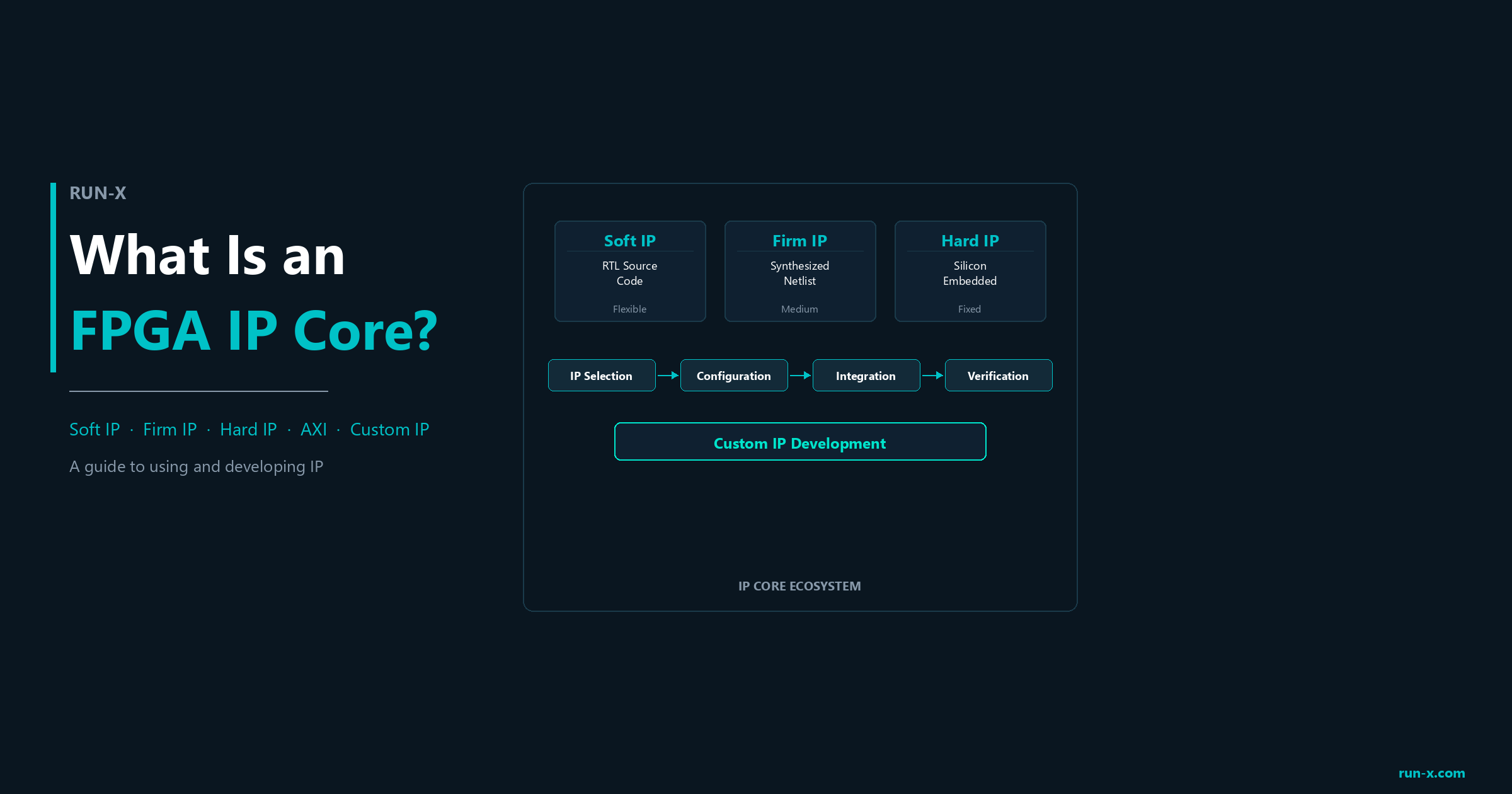
What Is an FPGA IP Core? Using and Developing IP
What is an FPGA IP Core and how do Soft, Firm, and Hard IP types differ? A practical guide to using IP Cores, choosing AXI interfaces, and developing custom IP.

Radar Signal Processing on FPGA
From raw echoes to detections: why the processing chain is the real radar, and why FPGAs sit at its core.

FPGA for Real-Time Image Processing
Does the imaging pipeline keep up? How a real-time architecture takes shape through latency classes, throughput math, backpressure and determinism?

Event-Based & Neuromorphic Vision on FPGA
Event-based vision asks which pixels just changed, not what the whole scene looks like. Why neuromorphic sensors pair naturally with FPGAs.
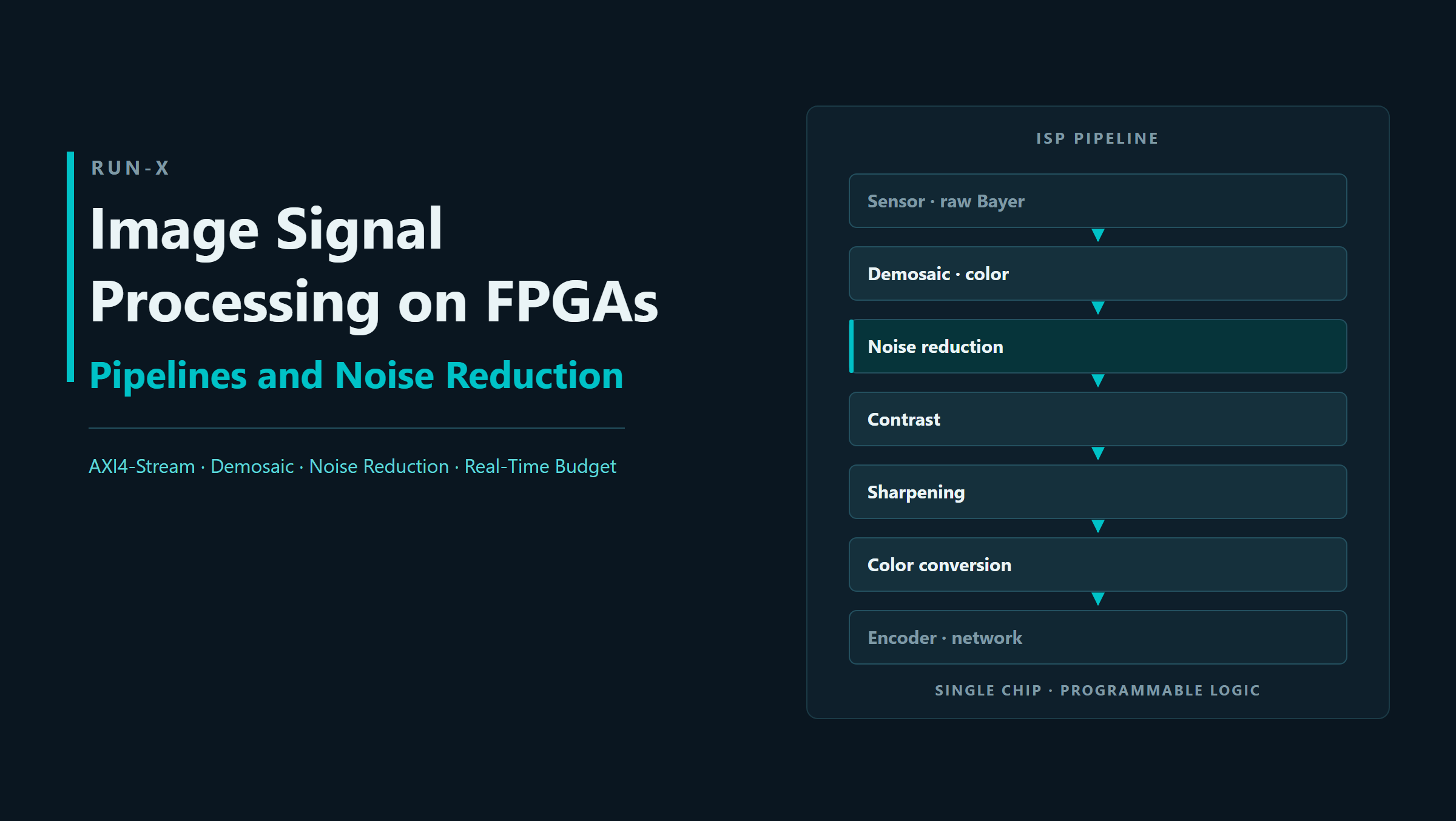
Image Signal Processing on FPGAs: Pipelines and Noise Reduction
How an FPGA turns raw sensor data into a viewable image: the order of the pipeline blocks, two ways to reduce noise, and the real-time constraint.
Edge AI on FPGAs: Hardware Selection and Deployment Strategies
Porting FP32 CNNs to sub-5W edge FPGAs: deterministic latency, QAT quantization, and a ~20× speedup achieved in a demo using our HADQ-Net approach.

One RTL, Every Vendor: Inside RunX's Multi-Vendor FPGA Strategy
How RunX designs FPGA RTL that ports across AMD (Xilinx), Altera, Lattice and Microchip, and why that discipline is a business strategy.

FPGA Families and Choosing the Right FPGA
Which FPGA board or chip is best for your projects? Manufacturers, FPGA families, and all the essential criteria you need to know to make the right choice.

PS and PL Architecture in FPGA SoC Devices
How we split work between PS and PL on a Zynq UltraScale+ MPSoC radar project: AXI, DMA and datapath decisions, measurements and a checklist.
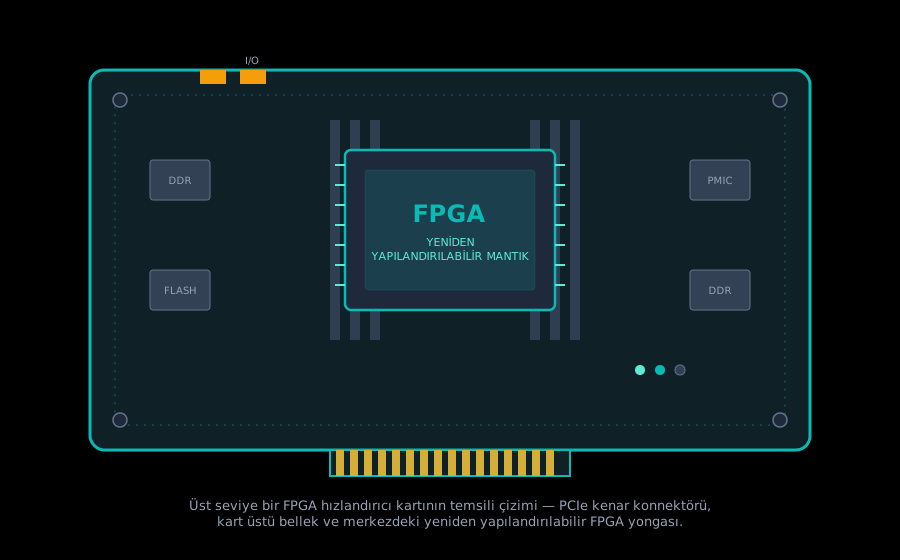
FPGA Hardware Resources: LUTs, BRAM, DSP, Clocking, and Routing
A beginner-friendly tour of the five physical resources that make up an FPGA's fabric, with diagrams for each.
What Is an FPGA? A Practical Guide
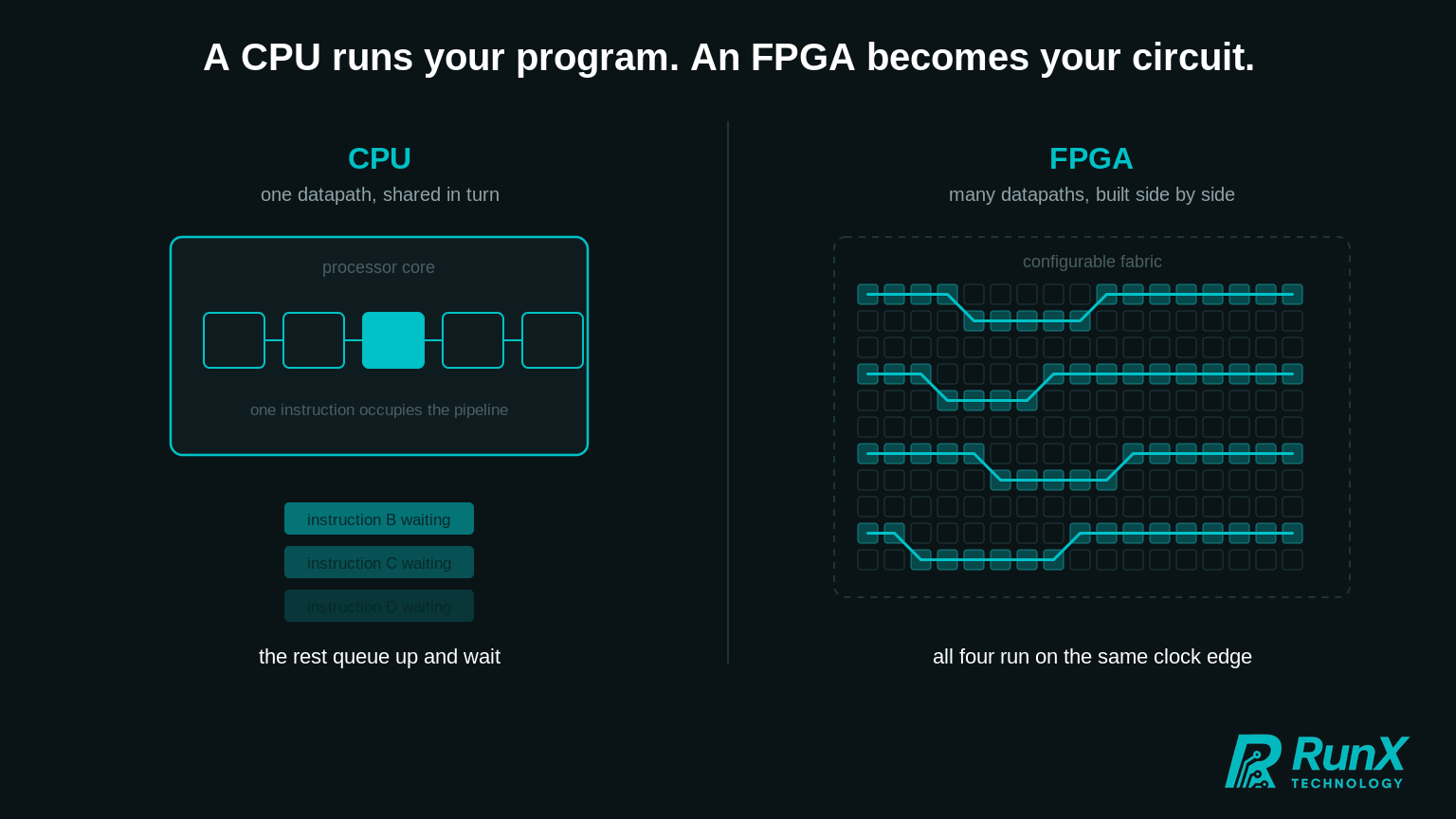
An FPGA does not run your code - it becomes your circuit. What FPGAs are, how they differ from CPUs, GPUs and ASICs, and when to choose one.